


What Is the Dental Implant Procedure?
A dental implant procedure is a multi-step treatment used to replace a missing tooth with an artificial tooth that is supported by a dental implant. Unlike a traditional dental bridge, a dental implant is designed to replace the tooth root as well as the visible portion of the tooth. The implant itself is typically a small titanium or other biocompatible post that is placed into the jawbone. After the implant heals and integrates with the surrounding bone, it can support an abutment and a dental crown that function together as a replacement tooth.
For many patients, understanding the dental implant procedure before beginning treatment can make the process feel much more manageable. Although every case is different, treatment generally involves an initial consultation, diagnostic imaging and planning, implant placement, a healing period, placement of the abutment, and attachment of the final dental restoration. Some patients may need additional procedures, such as bone grafting or treatment for gum disease, before an implant can be placed safely.
At Wake Cross Family Dentistry in Raleigh, NC, patients can discuss their tooth replacement needs, oral health, and treatment options during a professional dental evaluation. The goal of an evaluation is to determine whether dental implants are appropriate and to develop a treatment plan based on the condition of the teeth, gums, jawbone, and overall oral health.
How Does a Dental Implant Work?
A dental implant works by providing a stable foundation for a replacement tooth. The process involves three main components: the implant, the abutment, and the dental crown.
The implant is positioned within the jawbone and serves a role similar to a natural tooth root. The abutment is connected to the implant after the healing process and acts as the connector between the implant and crown. The crown is the visible portion that is designed to resemble a natural tooth in shape, size, and appearance.
One of the important characteristics of dental implants is that the implant is placed in the jawbone rather than simply resting on neighboring teeth. Over time, the bone can integrate with the implant surface through a biological process known as osseointegration. This integration helps create a stable foundation for the final restoration.
For example, consider a patient who has lost a single molar. A dental implant can be placed in the area where the tooth root was previously located. After the implant has had adequate time to heal, a custom restoration can be attached to restore the missing tooth. The exact approach depends on factors such as bone volume, gum health, the location of the missing tooth, and the patient’s individual treatment plan.
What Happens Before Dental Implant Placement?
The dental implant procedure begins well before the implant is surgically placed. A thorough evaluation is important because the dentist needs to understand the condition of the mouth and determine whether there is sufficient bone and healthy tissue to support the treatment.
Dental Examination
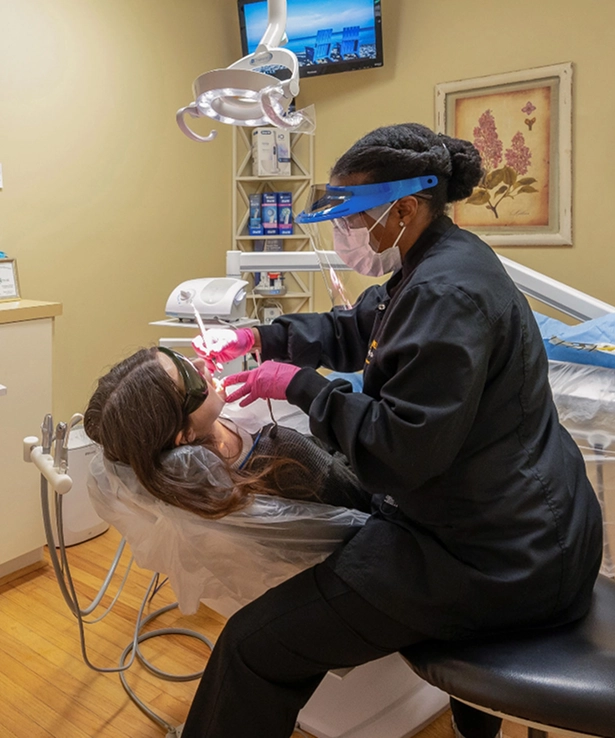
The first stage typically includes an examination of the teeth and gums. The dentist may evaluate existing teeth, gum tissue, bite alignment, signs of infection, and areas of bone loss.
The examination also helps identify conditions that may need to be addressed before implant treatment. For example, untreated gum disease can affect the tissues surrounding teeth and implants, so periodontal health may need to be stabilized before proceeding.
Dental X-Rays and 3D Imaging
Diagnostic imaging is another important part of implant planning. Depending on the case, conventional dental X-rays or three-dimensional imaging may be recommended.
Three-dimensional imaging can provide a more detailed view of the jawbone and the structures surrounding the planned implant site. This information can help the dental team assess bone dimensions and plan the position of the implant.
Treatment Planning
Once the examination and imaging are complete, the dentist can discuss treatment options. A treatment plan may include one implant and crown for a single missing tooth, several implants for multiple missing teeth, or a different implant-supported solution when an entire arch requires rehabilitation.
Patients should also discuss their medical history, medications, smoking or tobacco use, previous dental procedures, and any concerns about the treatment. These factors can influence treatment planning and healing.
What Happens During a Dental Implant Procedure?
The implant placement stage involves positioning the implant into the prepared area of the jawbone. The procedure is generally performed using local anesthesia, while additional forms of sedation may be considered depending on the patient’s needs and the type of treatment being performed.
After the area is adequately anesthetized, the dentist prepares the implant site and carefully positions the implant in the planned location. The gum tissue may then be closed around or over the implant depending on the treatment approach.
The exact duration of implant placement varies. A straightforward single-tooth implant may require considerably less treatment time than a more complex case involving several implants, bone grafting, extractions, or other procedures.
It is important to understand that placing the implant is only one stage of the complete dental implant procedure. The implant generally needs time to heal and integrate with the surrounding bone before it is used to support the final restoration.
Is Bone Grafting Always Necessary for Dental Implants?
No. Not every patient who receives a dental implant requires bone grafting.
However, sufficient bone volume is important for predictable implant placement. When a tooth has been missing for a long period, the jawbone in that area can gradually lose volume because it is no longer receiving the stimulation associated with a natural tooth root. Bone loss can also occur because of periodontal disease, trauma, infection, or other dental conditions.
If there is not enough bone in the planned implant area, a dentist may recommend a bone graft or another procedure to improve the foundation before implant placement. Depending on the situation, bone grafting may be performed before the implant procedure or as part of a staged treatment plan.
The need for grafting cannot be determined accurately without an examination and appropriate imaging.
How Long Does a Dental Implant Take to Heal?
Healing time varies from patient to patient and depends on several factors, including the location of the implant, bone quality, overall oral health, whether bone grafting was performed, and the complexity of treatment.
Osseointegration is the process in which the jawbone gradually bonds with the implant surface. This is an important part of implant treatment because the implant needs a stable foundation before the final restoration is attached.
Some patients may receive a temporary tooth during part of the healing period, while others may have a different temporary arrangement depending on the location of the missing tooth and their individual treatment plan.
The dentist will determine when the implant is ready for the next stage based on clinical evaluation and the progress of healing rather than simply following a fixed timetable.
What Happens After the Implant Heals?
Once the implant has adequately integrated with the jawbone, the next stage is usually placement of the abutment and final restoration.
The abutment connects the implant to the dental crown. Depending on the surgical approach, the abutment may be placed during the initial procedure or during a later appointment.
The dental crown is then designed to replace the visible portion of the missing tooth. The restoration is created to fit the patient’s bite and surrounding teeth. For a single missing tooth, the goal is generally to create a replacement that works comfortably within the existing dental arch.
This stage is important because the final restoration needs to function properly with the patient’s bite while also fitting naturally alongside neighboring teeth.
What Is Recovery Like After Dental Implant Surgery?
Recovery after implant surgery varies depending on the number of implants placed and whether additional procedures were performed.
Some patients experience temporary swelling, tenderness, bruising, or minor bleeding after surgery. These effects generally improve as the tissues heal. The dental team will provide individualized instructions for caring for the surgical area.
Patients may be advised to follow a modified diet temporarily, maintain appropriate oral hygiene around the treatment area, and avoid activities that could interfere with healing. Following postoperative instructions carefully is an important part of the recovery process.
Patients should contact their dental office if they experience unusual or worsening symptoms, significant bleeding, severe pain, fever, or other concerns after the procedure. A dental professional can determine whether an additional evaluation is needed.
What Can You Eat After Dental Implant Surgery?
Immediately after implant surgery, the dental team may recommend softer foods that require less chewing. Examples can include yogurt, eggs, mashed vegetables, smoothies consumed without a straw when advised, oatmeal, and other foods that are comfortable to eat.
As healing progresses, patients can generally return gradually to their regular diet according to their dentist’s instructions.
It is important not to assume that because an implant feels stable, it is ready to handle normal chewing forces immediately. The implant is still undergoing biological integration during the healing period, so following the recommended dietary restrictions can help protect the treatment site.
How Should You Care for Dental Implants?
Dental implants require ongoing oral hygiene and professional dental care. Although the implant itself cannot develop a cavity like a natural tooth, the surrounding gum tissue and supporting bone still need to remain healthy.
Daily brushing and cleaning between teeth are important. Depending on the patient’s restoration and individual anatomy, the dentist may recommend floss, interdental brushes, water flossers, or other cleaning tools.
Regular dental examinations are also important. During these visits, the dental team can monitor the implant, restoration, gums, and surrounding teeth.
Patients who have a history of gum disease should be especially attentive to periodontal maintenance because inflammation around an implant can affect the tissues supporting it.
Who May Be a Candidate for Dental Implants?
Dental implants may be an option for adults who have one or more missing teeth and have adequate bone and healthy oral tissues to support treatment. However, candidacy is not determined by missing teeth alone.
A dentist may consider:
- The amount and quality of available jawbone
- Gum and periodontal health
- The condition of neighboring teeth
- Bite and jaw function
- Oral hygiene
- Smoking or tobacco use
- Certain medical conditions and medications
- Previous dental treatments
- The patient’s ability to maintain long-term oral care
Some patients who initially have insufficient bone or untreated oral health problems may still become candidates after those issues are addressed.
A personalized examination is therefore more useful than relying on general eligibility guidelines.
Are Dental Implants Better Than Other Tooth Replacement Options?
Dental implants are one of several options for replacing missing teeth. Whether they are the appropriate choice depends on the individual situation.
A traditional dental bridge can replace a missing tooth by using adjacent teeth as support. A removable partial denture can replace several missing teeth and can be removed for cleaning. Dental implants, on the other hand, are placed within the jawbone and can support individual crowns, bridges, or implant-supported dentures.
There is no single solution that is ideal for every patient. Factors such as oral health, bone availability, budget, treatment preferences, number of missing teeth, and long-term goals should be considered when comparing options.
A dental consultation can help explain the advantages, limitations, risks, expected timeline, and maintenance requirements associated with each alternative.
What Factors Can Affect the Cost of a Dental Implant Procedure?
The cost of dental implant treatment can vary substantially because the treatment plan is different for every patient.
Factors that may affect the overall cost include the number of implants required, the type of restoration, diagnostic imaging, tooth extraction, bone grafting, periodontal treatment, sedation, temporary restorations, and the complexity of the case.
For example, replacing one missing tooth with a straightforward implant and crown may involve fewer treatment stages than replacing several missing teeth when bone grafting or other procedures are required.
Patients should ask for a detailed treatment estimate and clarify what is included before beginning treatment. A professional dental office can explain the planned procedures and associated fees based on the patient’s specific needs.
How Long Can Dental Implants Last?
Dental implants are designed as a long-term tooth replacement option, but their longevity depends on multiple factors. Oral hygiene, periodontal health, smoking, bite forces, general dental care, and regular professional monitoring can all influence the condition of the implant and restoration.
The crown attached to an implant can experience normal wear over time and may eventually require repair or replacement. The implant itself also requires ongoing care.
Good home care and routine dental visits are therefore important even after the final restoration has been placed.
Common Questions About the Dental Implant Procedure
1. How long does the dental implant procedure take?
The overall dental implant process can take several months because treatment often includes an initial evaluation, implant placement, healing, and final restoration. Some cases can be completed in fewer stages, while others require additional procedures such as bone grafting.
2. Is a dental implant procedure painful?
The implant placement procedure is performed with anesthesia to help manage discomfort during treatment. After surgery, patients may experience temporary soreness, swelling, or tenderness. The dental team will provide instructions for managing recovery.
3. Do I need a bone graft before getting a dental implant?
Not necessarily. Bone grafting is generally considered when there is insufficient bone to provide the desired foundation for an implant. Imaging and a dental examination are needed to determine whether grafting is appropriate.
4. How long after tooth extraction can I get a dental implant?
The timing varies. Some patients may be candidates for implant placement soon after an extraction, while others need to wait for the area to heal or require bone preservation or grafting first. The appropriate timing depends on the condition of the extraction site and the patient’s treatment plan.
5. How do you care for a dental implant after treatment?
Care includes regular brushing, cleaning between teeth, routine professional dental visits, and following the dental team’s recommendations. Maintaining healthy gums is particularly important for protecting the tissues around the implant.
6. Can dental implants replace multiple missing teeth?
Yes. Depending on the patient’s oral health and available bone, multiple implants can support individual crowns, an implant-supported bridge, or an implant-supported denture. The appropriate solution depends on the number and location of missing teeth and the patient’s specific anatomy.
Choosing the Right Dental Implant Treatment in Raleigh, NC
Replacing a missing tooth is an important decision, and the right treatment should be based on a careful evaluation rather than a one-size-fits-all approach. A dental implant procedure involves several stages, and understanding each stage can help patients make informed decisions about their oral health.
If you are considering dental implants in Raleigh, NC, Wake Cross Family Dentistry can evaluate your dental needs and discuss whether implant treatment may be appropriate for you. The office can also explain available tooth replacement options, expected treatment stages, and what may be required before and after implant placement.
For an evaluation, visit Wake Cross Family Dentistry at 4008 Mitchell Mill Rd SUITE 108, Raleigh, NC 27616, or call (919) 453-0777 to discuss your dental implant questions with the office.