


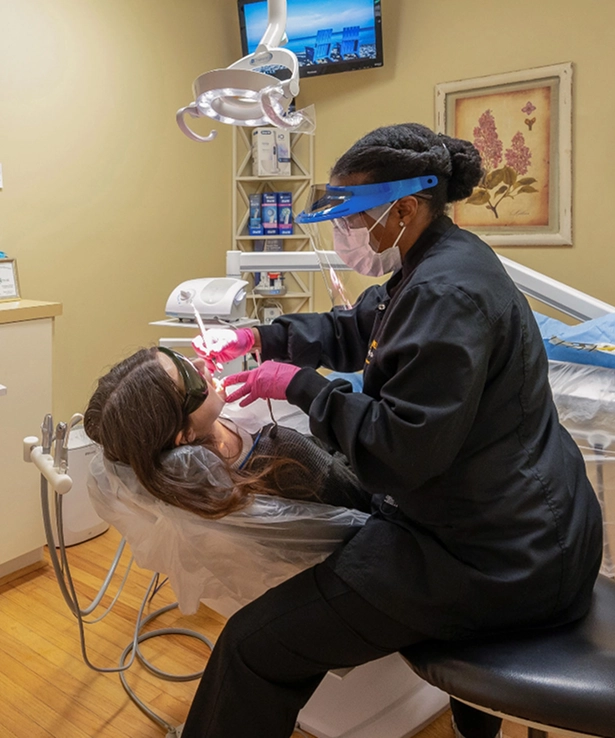

A professional teeth cleaning is one of the most common forms of preventive dental care, but many patients are not entirely sure what happens once they sit in the dental chair. A typical teeth cleaning involves examining the teeth and gums, removing plaque and hardened tartar, polishing the teeth, and reviewing oral hygiene needs. The goal is not simply to make the teeth feel smoother or look cleaner. Professional dental cleanings help remove buildup that regular brushing and flossing may not fully address and give the dental team an opportunity to evaluate changes in the teeth and gums.
Even people who brush carefully every day can develop plaque in areas that are difficult to reach. If plaque remains on the teeth long enough, minerals in saliva can cause it to harden into tartar, also called dental calculus. Unlike soft plaque, tartar cannot usually be removed effectively with a toothbrush at home. Professional instruments are used to remove these deposits without requiring patients to scrape their own teeth.
Understanding the teeth cleaning process can make a routine dental appointment feel more predictable. It can also help patients understand the difference between a standard preventive cleaning and other treatments, such as a deep cleaning for gum disease. While the exact appointment may vary according to a person’s oral health, most professional cleanings follow a similar sequence.
What Is a Professional Teeth Cleaning?
A professional teeth cleaning is a preventive dental procedure designed to remove plaque, tartar, and certain surface stains from the teeth. It is typically performed by a dental hygienist, although the dentist may also participate in evaluating the patient’s oral health.
Daily brushing and flossing remain essential because they continually disrupt plaque before it can accumulate. However, home care and professional dental care serve different purposes. A toothbrush can remove much of the soft plaque present on accessible tooth surfaces, while floss or other interdental cleaning methods help clean between teeth. Professional instruments allow the dental team to reach areas where deposits have hardened or become difficult to remove at home.
During the appointment, the hygienist also has an opportunity to observe the condition of the gums and identify areas where plaque or tartar tends to accumulate. This information can be useful when recommending changes to brushing, flossing, or other home-care techniques.
For many patients, professional teeth cleaning is therefore best understood as part of an ongoing preventive strategy rather than an occasional cosmetic treatment. Cleaner-looking teeth and fresher breath may be noticeable benefits, but the appointment is primarily focused on maintaining oral health and identifying potential concerns that may deserve further evaluation.
What Happens During a Teeth Cleaning?
A routine dental cleaning usually progresses through several stages. The precise order can vary between dental offices and according to the patient’s needs, but the basic process commonly includes an oral assessment, removal of plaque and tartar, polishing, cleaning between the teeth, and a final evaluation or home-care discussion.
Examination of the Teeth and Gums
Before cleaning begins, the dental hygienist generally examines the mouth. A small dental mirror may be used to look at the teeth, gumline, and areas that are difficult to see directly.
The hygienist may look for visible plaque and tartar, inflammation around the gums, areas of recession, bleeding, changes in existing dental work, or other findings that should be brought to the dentist’s attention. Depending on the appointment and the patient’s history, periodontal measurements may also be taken to assess the spaces around the teeth and evaluate gum health.
This initial assessment matters because not every patient needs exactly the same type of cleaning. Someone with relatively healthy gums and routine plaque or tartar accumulation may be appropriate for a standard preventive cleaning. A patient with signs of periodontal disease may require a different approach.
Plaque and Tartar Removal
One of the most important parts of professional teeth cleaning is scaling, which means removing deposits from tooth surfaces and around the gumline.
Plaque is a soft, sticky biofilm that continuously develops on the teeth. Regular brushing and flossing can remove much of it. When plaque remains undisturbed, however, it can mineralize and become tartar. Once tartar forms, routine brushing generally cannot remove it effectively.
Dental professionals use specialized instruments to carefully remove these hardened deposits. Depending on the situation, the hygienist may use hand scalers, ultrasonic instruments, or a combination of techniques.
An ultrasonic scaler uses rapid vibrations and water to help disrupt deposits from the teeth. Hand instruments allow the hygienist to work precisely around individual tooth surfaces and areas near the gumline. Patients may hear scraping or feel pressure and vibration during this portion of the appointment. These sensations are normal during professional scaling.
The amount of time required for this stage depends partly on how much buildup is present. Someone who receives regular cleanings and has limited tartar may require relatively little scaling. If substantial tartar has accumulated, removing it carefully may take longer.
Polishing the Teeth
After plaque and tartar have been removed, the teeth may be polished.
Dental polishing typically uses a specialized polishing paste and a small rotating rubber cup. This process helps remove certain external surface stains and leaves the tooth surfaces feeling smoother.
Polishing should not be confused with teeth whitening. A professional cleaning can remove some stains that sit on the external surface of the teeth, including discoloration associated with foods, drinks, or other sources. It does not fundamentally change the natural color of the tooth in the way a whitening treatment is designed to do.
Patients often notice that their teeth feel particularly smooth after polishing because accumulated deposits and some surface residue have been removed.
Cleaning Between the Teeth
The hygienist may also floss between the teeth as part of the appointment. Professional flossing can help remove material remaining between tooth surfaces after scaling and polishing.
This portion of the cleaning can also reveal areas where the gums bleed easily or where flossing is difficult. If certain contacts between teeth are particularly tight, or if dental restorations make cleaning challenging, the hygienist may discuss techniques or alternative interdental cleaning tools that could make home care easier.
Professional flossing does not replace daily interdental cleaning. Instead, it can reinforce the importance of cleaning areas a toothbrush cannot adequately reach.
Final Evaluation and Recommendations
Once the cleaning is complete, the hygienist or dentist may review findings from the appointment. Patients may receive recommendations based on their individual needs rather than generic instructions.
For example, a patient who consistently develops plaque behind the lower front teeth may benefit from spending more time brushing that area. Someone who has difficulty cleaning around a bridge, implant, orthodontic appliance, or other restoration may need a specialized flossing technique or interdental tool.
At Wake Cross Family Dentistry, preventive appointments can provide an opportunity to discuss these individual concerns while evaluating how the teeth and gums are responding to a patient’s current home-care routine.
Why Is Professional Teeth Cleaning Important?
The most immediate purpose of professional teeth cleaning is to remove plaque and tartar that have accumulated on tooth surfaces. The broader value comes from incorporating this removal into a consistent preventive dental routine.
Plaque develops naturally in the mouth. It contains bacteria within a biofilm that adheres to tooth surfaces. When plaque is not regularly disrupted, it can contribute to an environment associated with tooth decay and gum inflammation.
Tartar presents an additional challenge because its hardened surface cannot generally be brushed away at home. It can also create areas where additional plaque accumulates, particularly around the gumline.
Professional cleanings allow these deposits to be removed using instruments designed for that purpose. Regular appointments also give the dental team opportunities to observe changes over time rather than evaluating oral health only when discomfort develops.
Preventive dental visits are therefore about more than responding to existing problems. They provide opportunities to maintain cleaner tooth surfaces, evaluate gum health, discuss home care, and determine whether anything has changed since the previous appointment.
What Is the Difference Between Plaque and Tartar?
Plaque and tartar are closely related, but they are not the same thing.
Plaque is a soft biofilm that continually forms on the teeth. It can develop soon after brushing and tends to accumulate more heavily in areas that are difficult to clean. Because plaque is relatively soft, consistent brushing and interdental cleaning can remove much of it before it becomes established.
Tartar, or dental calculus, forms when plaque remains on the teeth and becomes mineralized by substances present in saliva. It is considerably harder than plaque and adheres firmly to tooth surfaces.
This difference explains why brushing harder is not an effective solution once tartar has developed. Excessive brushing pressure can potentially irritate the gums or contribute to unnecessary wear without successfully removing hardened calculus. Professional dental instruments are designed to remove these deposits more effectively.
Some people develop tartar more quickly than others. Saliva composition, oral hygiene habits, tooth alignment, crowding, restorations, and other factors can influence where and how rapidly deposits accumulate.
Can You Remove Tartar at Home?
Once plaque has hardened into tartar, it should generally be removed professionally rather than scraped from the teeth at home.
There are many dental tools available online that resemble professional scalers, but using sharp instruments without appropriate training can injure the gums or damage tooth surfaces and restorations. It may also be difficult for an individual to determine where deposits end and the natural tooth surface begins.
Home care is much more useful for preventing or slowing plaque accumulation before it mineralizes. Thorough brushing, cleaning between the teeth, and following individualized recommendations from a dental professional can reduce the amount of plaque that remains undisturbed.
If the teeth continue to feel rough near the gumline even after brushing, or visible hardened deposits remain, a professional dental cleaning may be appropriate.
Does a Teeth Cleaning Hurt?
For many people with relatively healthy teeth and gums, routine teeth cleaning causes little or no significant discomfort. Patients may feel pressure, vibration, scraping sensations, or sensitivity when instruments are used around certain teeth.
The experience can be different when the gums are inflamed, substantial tartar is present, tooth roots are exposed, or a patient already experiences dental sensitivity. Areas near gum recession may also respond more strongly to temperature changes or instrumentation.
Communication can make the appointment more comfortable. Patients who know they have sensitive teeth should tell the dental hygienist before the cleaning begins. The clinician may be able to adjust techniques, work more gradually around sensitive areas, or discuss appropriate options depending on the situation.
Persistent or significant discomfort during a routine cleaning can also provide useful information. Rather than simply ignoring it, patients should tell the dental team exactly where the sensitivity occurs so the area can be evaluated.
How Long Does a Teeth Cleaning Take?
A routine teeth cleaning commonly takes approximately 30 to 60 minutes, although appointment length varies considerably.
The amount of plaque and tartar present is an important factor. A patient who has relatively little buildup may require less scaling than someone who has not received professional care for an extended period. Gum condition, tooth sensitivity, restorations, orthodontic appliances, and the need for additional examination or diagnostic procedures can also affect appointment length.
New-patient visits may take longer because the dental team may need to collect health information, perform a more comprehensive examination, take appropriate dental images, or establish baseline periodontal measurements.
Rather than focusing exclusively on how quickly a cleaning can be completed, it is more useful to allow enough time for a thorough evaluation and appropriate preventive care.
How Often Should You Get Your Teeth Cleaned?
Many patients are familiar with the idea of visiting the dentist every six months. While twice-yearly preventive visits are common, there is no single interval that is appropriate for every person.
The recommended frequency of professional dental cleanings depends on individual risk factors and oral health needs. A patient with healthy gums, consistent home care, and relatively low accumulation may have different needs from someone with a history of periodontal disease, rapid tartar formation, extensive dental restorations, orthodontic appliances, or other factors affecting oral hygiene.
This is why cleaning schedules are best individualized by a dental professional who can evaluate the patient’s current oral health and history.
The more important principle is consistency. Delaying preventive visits for long periods may allow plaque and tartar to accumulate and can reduce opportunities to identify changes early.
Teeth Cleaning vs. Deep Cleaning: What Is the Difference?
A routine teeth cleaning and a deep cleaning are not simply different versions of the same procedure.
Routine preventive cleaning, often referred to as prophylaxis, is generally intended for patients whose periodontal condition is compatible with preventive maintenance. The focus is primarily on removing plaque, tartar, and stains from accessible tooth surfaces and maintaining oral health.
A deep cleaning commonly refers to scaling and root planing, a periodontal treatment used when disease-related deposits and inflammation extend below the gumline and require more extensive treatment.
When a Deep Cleaning May Be Recommended
A dentist or dental hygienist may evaluate periodontal pocket measurements, gum inflammation, bleeding, bone levels visible on dental images, and other clinical findings when determining whether periodontal therapy is necessary.
Patients should not assume that a more thorough routine cleaning is equivalent to scaling and root planing. The diagnosis, treatment objectives, and areas being treated are different.
If a deep cleaning is recommended, asking why it is needed and what findings support the recommendation can help patients understand their periodontal condition and treatment plan.
What Should You Do Before a Dental Cleaning?
Most routine teeth cleaning appointments do not require extensive preparation. Brushing and flossing normally before the visit is sufficient.
Patients should provide accurate information about medications, medical conditions, allergies, recent procedures, or changes in health that could be relevant to dental treatment. The dental team can then determine whether any special considerations apply.
If dental anxiety, tooth sensitivity, a strong gag reflex, or a previous uncomfortable cleaning is a concern, mentioning it before treatment begins can also be helpful. Dental professionals can often adapt the pace of the appointment and explain what is happening as they work.
There is no need to attempt an unusually aggressive cleaning at home immediately before the appointment. The purpose of the professional visit is to evaluate the mouth as it is and provide appropriate care.
What Should You Expect After a Teeth Cleaning?
After a routine cleaning, the teeth often feel noticeably smoother because plaque and tartar deposits have been removed. Some patients also notice that their mouth feels fresher.
Temporary sensitivity can occur, particularly if significant tartar was present or if areas of root surface are exposed. Mild gum tenderness may also occur when the gums were already inflamed before the cleaning.
Most people can return to their normal activities immediately after a routine cleaning. If fluoride or another treatment is provided during the appointment, the dental team may give specific instructions about eating or drinking afterward.
A professional cleaning also creates a useful opportunity to reset home-care habits. When tooth surfaces are clean, consistent brushing and interdental cleaning can help limit how quickly plaque begins accumulating again.
How to Keep Your Teeth Cleaner Between Dental Visits
Professional dental cleanings are most effective when combined with consistent oral hygiene at home. The goal between visits is to regularly disrupt plaque before it has time to accumulate and mineralize.
Brushing twice daily with fluoride toothpaste is a widely recommended foundation of oral hygiene. Technique matters as much as frequency. The toothbrush should reach the outer, inner, and chewing surfaces of the teeth, with attention given to the gumline and areas where plaque commonly collects.
Cleaning between the teeth is equally important because toothbrush bristles cannot reliably reach every interproximal surface. Traditional floss works well for many people, while interdental brushes, floss threaders, or other tools may be more practical for patients with particular restorations, orthodontic appliances, or larger spaces between teeth.
Patients who consistently accumulate plaque or tartar in the same location can ask their hygienist to identify those areas during a cleaning. Knowing exactly where buildup occurs makes home-care recommendations more specific and actionable.
Dietary patterns can also influence oral health. Frequent exposure to fermentable carbohydrates can provide oral bacteria with repeated opportunities to produce acids. Drinking water and maintaining a balanced eating pattern can complement brushing, flossing, and professional preventive care.
Can Teeth Cleaning Remove Stains?
Professional teeth cleaning can remove some external surface stains, but it does not remove every type of tooth discoloration.
Extrinsic stains develop on the outside of the teeth and may be associated with coffee, tea, certain foods, tobacco, or other sources. Scaling and polishing may reduce some of these stains, especially when discoloration is associated with plaque or superficial deposits.
Intrinsic discoloration occurs within the tooth structure and generally does not disappear during routine cleaning. Natural tooth color also varies considerably from person to person.
Patients interested in changing the overall shade of their teeth should discuss the difference between professional cleaning and cosmetic whitening with their dentist. Cleaning focuses primarily on oral health and surface deposits, whereas whitening is specifically intended to alter tooth color.
Why Do My Teeth Feel Different After a Cleaning?
Patients sometimes notice small spaces, different contours, or increased sensitivity immediately after tartar has been removed. This does not necessarily mean that the cleaning created a new problem.
When substantial calculus accumulates around teeth, it can physically occupy spaces near the gumline or between teeth. Once those deposits are removed, patients may suddenly notice the natural shape of the teeth or spaces that had previously been covered.
Similarly, inflamed gums can change in appearance as inflammation improves. These differences can make the mouth feel unfamiliar for a short period.
If a tooth feels unusually sharp, painful, mobile, or otherwise concerning after an appointment, however, the patient should contact the dental office so the area can be evaluated.
The Role of Teeth Cleaning in Long-Term Preventive Care
Professional teeth cleaning works best as one part of a broader approach to oral health. It does not replace daily brushing, cleaning between the teeth, appropriate dental examinations, or treatment when a dental condition is diagnosed.
Instead, professional cleanings complement home care by addressing deposits that patients cannot reliably remove themselves and by providing regular opportunities for clinical observation.
This partnership is particularly valuable because oral health changes are not always accompanied by immediate pain. Gum inflammation, early decay, worn restorations, or changes in bite and tooth surfaces may develop gradually. Regular dental visits allow these areas to be monitored and discussed.
For patients in Raleigh who are uncertain about their cleaning schedule or have noticed increased tartar, gum bleeding, sensitivity, or other changes, a preventive dental evaluation can help determine what type of care is appropriate. Wake Cross Family Dentistry provides preventive dental care at 4008 Mitchell Mill Rd Ste 108, Raleigh, NC 27616.
Frequently Asked Questions About Teeth Cleaning
What happens during a professional teeth cleaning?
During a professional teeth cleaning, a dental hygienist typically examines the mouth, removes plaque and hardened tartar with specialized instruments, polishes the teeth, cleans between the teeth, and reviews oral hygiene needs. The exact process can vary depending on the condition of the teeth and gums.
How long does a professional teeth cleaning take?
A routine teeth cleaning often takes approximately 30 to 60 minutes. The appointment may take longer when there is substantial tartar accumulation, additional examination is required, or the patient has specific periodontal or dental needs.
Does professional teeth cleaning hurt?
Routine cleaning is generally well tolerated, although some patients experience pressure or temporary sensitivity. Inflamed gums, exposed root surfaces, significant tartar accumulation, and existing tooth sensitivity can make certain areas more uncomfortable. Tell the hygienist if you experience sensitivity during treatment.
Can a dental cleaning remove tartar?
Yes. Removing hardened tartar, also called dental calculus, is one of the primary purposes of professional teeth cleaning. Once plaque has mineralized into tartar, regular brushing and flossing generally cannot remove it effectively.
How often should I have my teeth cleaned?
Cleaning frequency should be based on individual oral health needs. Although six-month intervals are common, some patients may require a different schedule based on periodontal health, tartar accumulation, dental history, home care, and other risk factors. Your dentist or dental hygienist can recommend an appropriate interval.
Is a teeth cleaning the same as a deep cleaning?
No. A routine preventive teeth cleaning and a deep cleaning serve different purposes. A deep cleaning generally refers to scaling and root planing used to treat periodontal disease below the gumline. A dental professional determines which procedure is appropriate based on examination findings and periodontal health.
Schedule a Professional Teeth Cleaning in Raleigh, NC
Professional teeth cleaning is a straightforward but important part of preventive oral care. By removing plaque and tartar that home brushing cannot always address, routine cleanings can help patients maintain cleaner tooth surfaces while giving the dental team an opportunity to monitor the condition of the teeth and gums.
The appropriate cleaning schedule and type of treatment should always reflect the individual patient’s oral health. If it has been some time since your last dental cleaning, or you are experiencing tartar buildup, gum bleeding, sensitivity, or other changes, an examination can help determine the appropriate next step.
Patients looking for professional teeth cleaning in Raleigh can contact Wake Cross Family Dentistry at 4008 Mitchell Mill Rd Ste 108, Raleigh, NC 27616. To ask about preventive dental care or schedule an appointment, call (919) 453-0777.